The Semantics of the Sisterhood: How We Can Promote Breastfeeding Honestly and Positively
Today I’m pleased to bring my readers a lovely guest post by Lara, CLEC and the woman behind TLB Sponsor Mama Pear Designs. Let’s consider how we talk about breastfeeding!
When you are pregnant, you must give birth to the baby, there’s no alternative. And while there are various birth options available to women the end result is the same – you will give birth to a baby. Until relatively recently, and in many parts of the world still today, the same was/is true for breastfeeding. There was no alternative to breast milk to nourish and sustain a baby. Either you or another lactating woman, had to put your baby to breast for its survival. Today however, we know that breastfeeding is not a given, and as such we need to offer more support to pregnant women because they can choose not to do it. Perhaps they make the choice not to, simply because they do not have enough information to make an informed one. I am in no way saying mothers who choose to use artificial baby milk are in the wrong, I support their choice to do so. I do not think that anyone should be forced to breastfeed, the choice is a personal one that must fit every mother and her new family; sometimes that means choosing artificial baby milk, and no mother should have to justify her choice to anyone. However, I do believe that prenatal breastfeeding education is lacking in many ways, and as such many mothers who might breastfeed miss out an on the opportunity because they are not given the information. In addition, postnatal breastfeeding support can be hard to come by for some, and the combination of the two can be detrimental to women who have the very best intentions. The reality is once you choose not to breastfeed it is a decision that is difficult to reverse. For these reasons we need to offer support to women in need, so they do not get caught in a situation they did not anticipate.
So who am I talking about, who is “we”? Well everyone, really: all healthcare professionals, employers, friends, and family. Specifically though I want to address the sisterhood aspect of the support scenario. And by sisterhood, I mean the mother-to-mother support, such as the friend who hosts your baby shower and brings you dinner while you are “babymooning” after your baby’s birth, or whom you call when your baby has its first cold, first giggle, or rolls over for the first time.
What we say to each other and how we say it can be very powerful, both in a negative and positive way. I want to raise awareness and create consciousness about these conversations involving breastfeeding. I truly believe it is time to re-examine the language we use when we talk about the breastfeeding experience to women who have never done it, who are considering it, or who are in the throes of it. If you have professional lactation training, you are sensitive to this. You never phrase anything so that the mom feels like she has done something wrong, and you try to get a sense of her confidence so that you have the correct approach for her individual situation. But the rest of us, well we could use a little guidance. I have been a breastfeeding mother for four years, and recently became a Lactation Educator, so now I am able to participate in both sides of the conversation.
The first thing I would like is for people to stop telling breastfeeding moms is that it is hard. Does the word “hard” word motivate you? Probably not, and especially not if you are worried about how the baby will be born, when will it be born, will your pre-pregnancy body come back, what is sex like after the baby, will your swollen ankles ever go away, etc. Pregnancy is hard, and you do not want to hear that once the baby comes, more “hard” is waiting for you around the corner. (A TLB post asking if Breastfeeding is hard “Breastfeeding Hard?” and another listing 25 things women commonly face that are harder than breastfeeding.) I think we can be honest, but careful with our words. Breastfeeding can come with challenges and many questions, but there are ways to overcome those challenges and professionals and friends alike, can help new moms find the answers. A conversation with a pregnant friend really should not sound like this:
Me: So, you are going to breastfeed, right?
Friend: Well, I think so, but I am not sure.
Me: Well it is hard, I had cracked and bleeding nipples, thrush, I leaked milk for months, but it was worth it.
Friend: Ummm…okay. (exit pregnant woman, running for the hills)
First of all, even though I have the best of intentions, I made the assumption that she was going to breastfeed and asked in a tone that made it seem like she was wrong if she chose not to do so. I do not believe she is wrong for choosing not to breastfeed, should that be the case. Remember, she is entitled to make her own decision on how to feed her baby, I really just want her choice to be a well-informed one. So while I was trying to be honest, and I did tell her it was worth all of the early obstacles, I just scared her nipples of her poor swollen boobs, because she stopped listening at “bleeding nipples”. After that she heard nothing else. Guaranteed.
So maybe here’s a better way to approach the conversation:
Me: I just wanted to let you know that if you decide to breastfeed, I am always available to help you in any way, I’ll be glad to help you answer questions or help you find some reliable resources.
Friend: Oh thanks, I am not sure yet, I have heard that is it really hard, so I will probably try it, but we’ll see.
Me: You know just like learning anything with a new baby, it can have some challenges, but most women find that with the right support they are able to overcome the obstacles breastfeeding poses for them.
I did not use the word “hard,” but I did not make breastfeeding seem like it was going to be as natural as some assume it to be. I also offered to support her, and hopefully she now knows that she can ask me when the time comes should she have any questions.
Using language that makes breastfeeding seem unfavorable, words like hard, hurts, and painful, really does not do a great deal to sell the idea to women who may be on the fence regarding breastfeeding. I talk to women all the time who say, “Well I hear it’s hard, but I am going to do it anyway.” What a wonderful attitude, she is committed from the get-go. The problem is that if she thinks it is going to be hard, it will be. If you have read anything I’ve written before then you know that my sister was my biggest supporter as I began to breastfeed my oldest son, and I was smart in that I really only turned to her for advice. One reason was that I was the first among my friends to have a baby, but the main reason was that she was successful in breastfeeding my nieces, and she never told me horror stories, she just offered positive support. And you know what? I never had any major problems. A couple of times I had plugged ducts, but nothing too serious that could not be solved by a twenty four hour nurse-a–thon. I had an overactive Milk Ejection Reflex, but eventually my babies grew and were able to keep up with mama’s fast flow! Essentially, I just tuned out the naysayers and focused on my cheerleaders: my sister, my husband, and my growing baby boys.
One of the other things with which we need to learn to be okay, is approaching the topic of breastfeeding in the first place. Pregnant women are often subject to invasive questions, and even unwanted belly groping, we are all aware of this phenomenon. It is commonplace to ask, “Do you know what you are having? (A human is always a great answer), or “What are you naming your baby?” (I always responded with “Chuck Norris”). I said before that my only hope is for women to make well-informed decisions about choosing to breastfeed. It is possible to offer your help, your sisterhood guidance, in a way that does not put the mother-to-be in an uncomfortable position. I approach pregnant women, perfect strangers, all the time and discuss breastfeeding. As a Lactation Educator, I cannot help myself – I am like a moth drawn to a flame. However, I am very careful about the language I use. I never ask their plans for feeding, I just offer my support and information. I usually say, “If you are considering breastfeeding, I would love to have you in my class. Here’s my information (on a business card), please contact me if you have any questions about my class or breastfeeding, either now or after the baby arrives, as I love to help moms and have a great list of resources to share.” Done. If she has chosen not to breastfeed then she can say, “Thank you” and throw my card away, or if she has (and I am glad to say most moms say they are going to try) then she has met one person who has offered to help her.
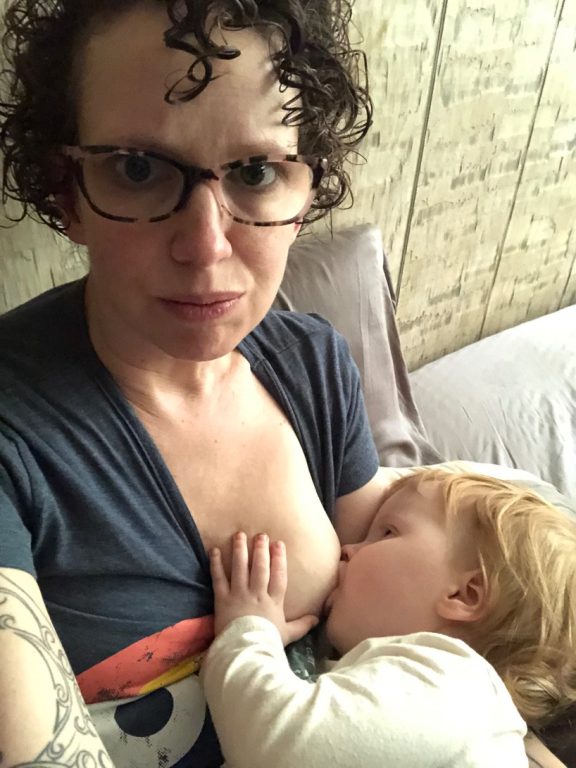
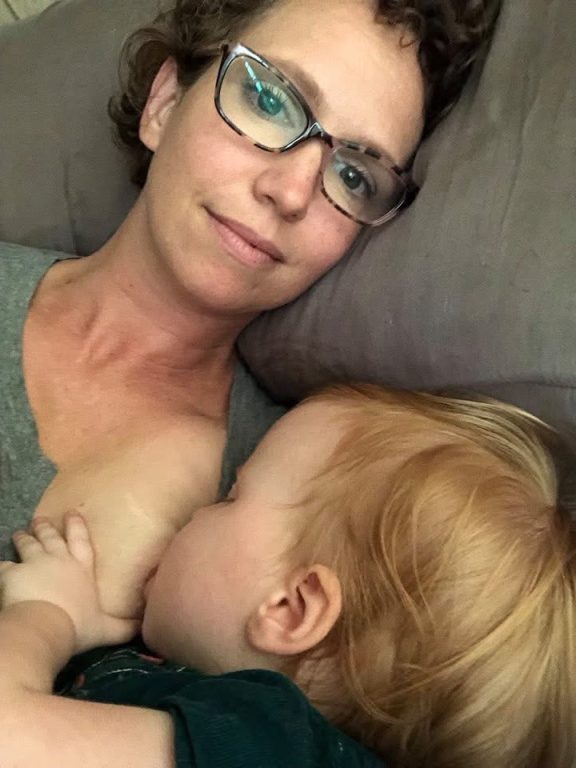
And last but not least, let us stop asking moms with older babies if they are still breastfeeding. Even if we mean no harm, improper emphasis on the word “still” can make a mom feel like she is doing something wrong, when in reality if she and her baby/toddler/preschooler are still nursing happily, then they are doing everything right. We are all aware that there are many people in society who are okay with a woman breastfeeding a newborn, or a baby who is four or five months old. But with the eruption of teeth, moms start hearing suggestions that maybe it is time to wean, and certainly if a baby or toddler can ask for the breast the time has come to wean, right? Wrong. Is your breastfeeding relationship anyone’s business? Why does it matter if a mother is breastfeeding her 12 month old, or her 22 month old, or her 32 month old? Quite simply, it does not. It has no bearing on anyone whatsoever. The problem is most people, including “first-generation” breastfeeding moms do not realize that it is normal to breastfeed children, not just babies. When most people use the words “still” and “breastfeeding” together, it is merely so they can then comment how it is time to wean, that the relationship has run its course. (Except me of course, if I ever meet you and ask you this, and you say yes, no matter how old your child is, I will congratulate you!) So while I support talking openly about breastfeeding, I think the details of your relationship should remain as private as you like. Should someone ask you a question that you do not want to answer because you anticipate that you may receive unsolicited advice about weaning on someone else’s timetable, then I suggest you reply with this question: “Why do you ask?” It will usually put people in their places without them even realizing it.
So are you in? Can we start rethinking and rewording how we offer our support to our breastfeeding mama friends, our “sisters”, in need of a little advice? I hope we can let go of the negative words that are a turn-off and instead be honest in a positive way, while showing our friends where to turn for help, either in their local communities or online.