Breastfeeding Hard?
You had a baby. Somewhere during your pregnancy or maybe even before, you realized that the baby inside you was going to have to come out. Your fantasies up until this point had mostly been about round bellies, shopping for baby things and then, like magic, holding a tiny bundle of a person. Rosey and shiny visions where even the diapers are adorable. There may be moments of panic where a little voice freaks out in your head that you’re going to be a mother. But it’s exciting too. And then it hits you: you’re going to have to get it out of you. Perhaps a movie reel begins in your head with sound bites of conversations you’ve either been a part of or you’ve overheard and soon you’ve created a composite of what you imagine your birth is going to be and it plays like a horror movie over and over in your head. Even worse, people may start sharing their own horror stories telling you about their births.
I’ve never understood this, by the way. See a glowing, beautiful, happy looking pregnant lady and let’s tell her the scariest crap about birth ever. Because that’s real sweet and encouraging. What kind of person does that and why? Sadists.
If TV, movies, and personal horror stories dominate our view and understanding of childbirth as a society then we have lost our birth culture. We have replaced it with a Hollywood version, a version of sensationalism and fear. It may be more entertaining but it isn’t very inspiring. And so we lose the true culture of birth and replace it with something… other.
Then it happens. Hopefully you’ve prepared yourself by taking a childbirth education class by the time the actual birth rolls around and have replaced your horror film composite with positive birth images but either way, that baby is coming out. Regardless of how your little bundle is born, it’s hard work and, let’s be honest here, it changes you forever. Often during labor a woman will say “I can’t” but then she does. When a birthing woman I’m attending says these words I know two things: she is probably close to the end and she already is doing it. You can’t do this? You already ARE! Sometimes that is all we need to hear to release our fear, listen to our intuition and just do, just be. In labor you experience some of the hardest work of your life. Even if you get the drugs and you don’t feel what’s going on, your body feels it, your body does it and you bear the marks of the last leg of the journey toward motherhood. Home, hospital, birth center, unmedicated vaginal birth, epidural vaginal birth or cesarean, this experience births not only your baby but you as a mother as well. In this experience you discover that you, the mother you, is strong, powerful, courageous, beautiful, gentle, nurturing, determined, and so much more. You are any one of those things in any given moment. You are all of those things at once. You are Mother.
And just like that it is over. The journey towards motherhood complete. Now you embark on the journey of motherhood, a journey you will be on for the rest of your life.
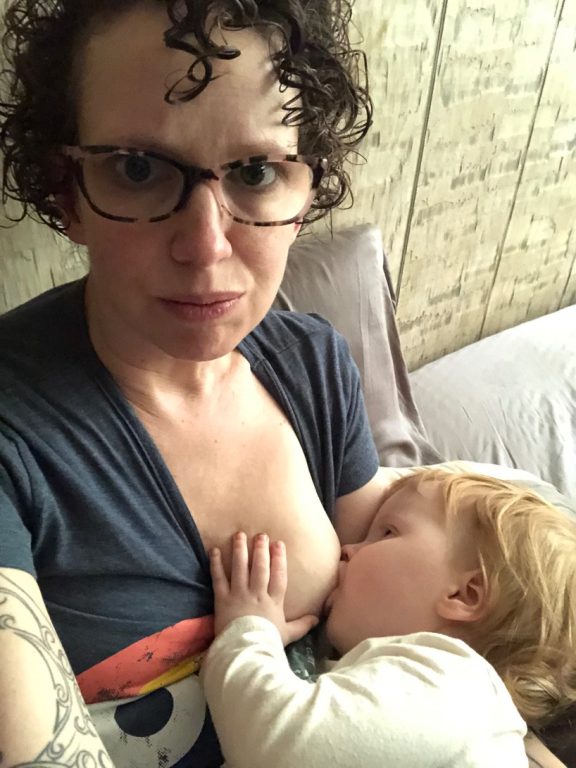
Breastfeeding may be normal, it may be totally natural but it isn’t always easy. Sometimes that catches us by surprise and our confidence flies out the window. When a new mom is at her wits end, exhausted and unsure, when she can’t see what she has become on her journey to motherhood and now fear is all she hears, a new horror flick may begin to run through her head. This time it is about breastfeeding and she doesn’t know it but she’s been booby trapped (Best For Babes shares how). This new film is punctuated by an alarming number of sound bites from well meaning friends, family and strangers saying things like “breastfeeding is so hard!” “formula is just as good,” “not everyone can breastfeed, I couldn’t, you probably can’t either,” “what’s your partner going to do if you breastfeed?” “If you put them on formula they won’t have to eat so often, they must not be getting enough if they are always so hungry!” and the oh-so-supportive “you won’t make it past a few weeks at most.” Add in formula advertisements that promise brain boosting all-natural additives, claim to be perfectly formulated to meet your baby’s needs, offer the allure of sleeping through the night, dish up precisely measured scoops so you know exactly how much your baby is getting and powder in a can sounds like the greatest fear and stress reducer available to new parents. Even worse, those fears can be handed a megaphone when inadequately educated experts; OBs, RNs, pediatricians, and even some midwives and lactation consultants are sometimes undereducated and perpetuate some common myths about breastfeeding and early infant feeding and growth. They tell her how, when, with what, in what way, how often what it looks like, what it sounds like, what it feels like, what it weighs like, what it charts like. In fact, the information may clutter things up so much a mom doesn’t have the chance to listen to the natural desires of herself and her baby. She may be so distracted and worried about doing it wrong that nothing is going right. (I absolutely adore what Kathleen Kendall-Tackett, PhD, IBCLC has to say on an over-left-brained approach to breastfeeding)
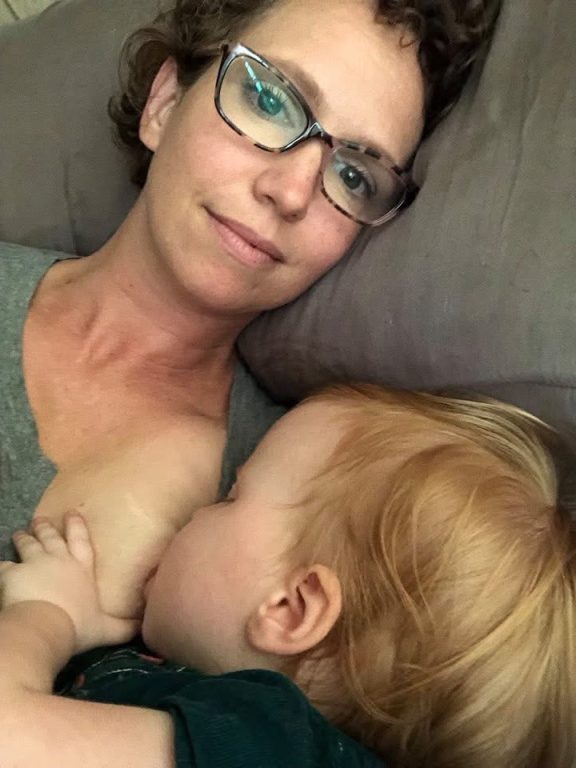
Barring any true breastfeeding problems such as Insufficient Glandular Tissue (google it) or other legitimate problems, most of the time what a mother struggling with breastfeeding needs to hear is simply “You can do this. You ARE doing this.” I’m going to go out on a limb here and say that breastfeeding isn’t too hard for anyone. Is it hard? Yes, often it is, but I don’t believe one single mother would find it too hard. No, what is too hard is battling lack of support, bad information, fear, societal expectations, and maybe even her own body. Sometimes a mom may want to give up, I know I have, but breastfeeding is not too hard. If you put your baby to your breast, if you hook yourself up to a breast pump, you ARE doing it. There is no guarantee that it will work exactly how it is supposed to every single time but most of the time it will. Even when it doesn’t it isn’t because breastfeeding is too hard, it’s just the other obstacles that got in the way that were too difficult to manage.
Check out this list of 25 things that could be harder than breastfeeding. Bet you’ve done a few of these already.
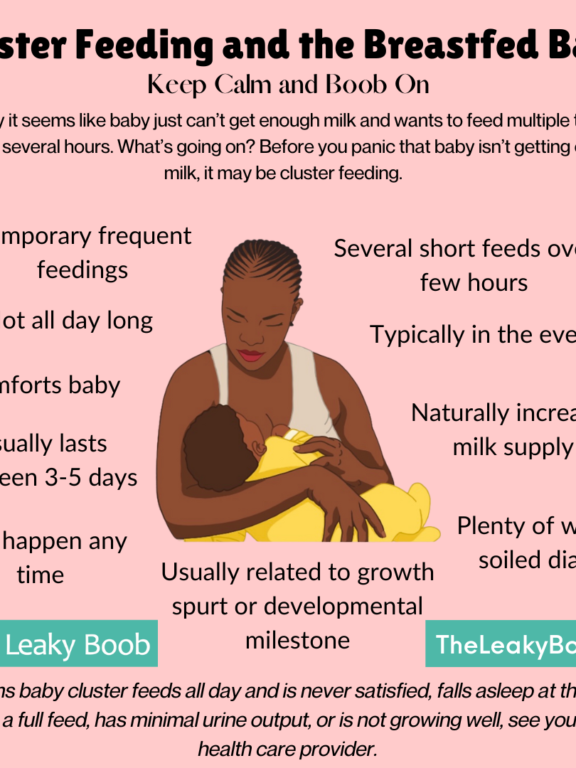
Just as we have lost the true culture of birth we have lost the true culture of breastfeeding. When we believe that a what is actually normal, such as a newborn eating every 2 hours (taking up to 45 minutes or even an hour at the breast meaning all. the. time.) or the breasts feeling less full after a few weeks or months as the body regulates supply, when we believe these normal physiological developments are not normal and reach for formula as a first solution then we have forgotten the true culture of breastfeeding. (Christie Haskell over at The Stir has a post with pictures to demonstrate the size of a newborn stomach if you’re wondering why a newborn does eat so often.) There was a time when instead of calling a lactation consultant about these issues women would have asked a more experienced family member. Don’t get me wrong, I love lactation consultants, I just long for the days when they weren’t quite so needed.
We should be honest about our breastfeeding experiences, the good, the bad and the ugly, and the funny too. However, let’s not forget to tell the good and build moms up in their breastfeeding regardless of what becomes the primary source of nutrition for their baby. Breastfeeding may be hard sometimes but you’ve probably already handled harder. And for those of us that have come through breastfeeding challenges with positive and not-so-positive stories, we need to be bosom buddies for others.
So let me add my voice to the chorus of lactation consultants, breastfeeding support organizations, and the host of bloggers and say most women can breastfeed. Put your baby to your breast and you ARE breastfeeding! You go girl! Maybe, just a little, we can reclaim the true culture of breastfeeding.
I know that not everyone can or should breastfeed and I don’t wish guilt on anyone that feeds their baby formula. There is not one single thought in my head that those that give their babies formula are somehow less as mothers or didn’t try hard enough or are weak. I recognize that every situation is different and support all mothers in nurturing their children regardless of how they are fed. Still, I will continue to encourage breastfeeding and let women know that for most it’s not only normal it’s entirely possible.